Abstract
This mini research project explores the question "Why is fashion political?" by examining fashion beyond its aesthetic and functional purposes. Through interviews and secondary research, the project focuses on two key themes: fashion as identity and self-expression and fashion as economic and labor politics. The first theme explores how clothing allows individuals to communicate their identity, personality, and relationship with social expectations. The second examines the systems behind clothing, including labor, production, money, and business decisions. The project also uses the white shirt as a design object to demonstrate how a simple garment can carry different social and cultural meanings depending on how it is produced, worn, and interpreted. Drawing on Elizabeth Wilson's Adorned in Dreams: Fashion and Modernity alongside other academic sources, the research suggests that fashion is political because it exists between the individual and wider social systems. What we wear can communicate who we are, while the garments themselves reveal the people, labor, and economic structures behind fashion.
Introduction
This suggests that fashion is never just an aesthetic; it is a language people use to build identity and reveal the politics behind who makes the clothes we wear. Fashion is often seen as something related to trends, beauty, and personal style. However, clothing can communicate much more than appearance. What people wear can express identity, culture, gender, social position, and personal beliefs. At the same time, fashion is connected to a much larger system involving designers, workers, businesses, money, production, and consumption. This research asks: Why is fashion political? To explore this question, I focused on two main themes from my interviews: fashion as identity and self-expression and fashion as economic and labor politics.
I also use the white shirt as a design object because it is a simple and familiar garment that can have different meanings depending on how and where it is worn. Elizabeth Wilson's Adorned in Dreams: Fashion and Modernity is used as the main academic source because it examines fashion through its social and cultural history and its relationship with identity, modernity, gender, and oppositional dress (Wilson, 2003).
Theme 1: Fashion as Identity and Self-Expression
One of the strongest findings from the interviews was that people see fashion as a way of communicating identity. One interview participant explained: “Fashion is a way to show people who I am without having to explain myself.” This shows that clothing can work as a form of communication. Before a person even speaks, their clothing can give other people an idea of their personality or the way they want to be perceived. Fashion allows people to make choices about how they present themselves to the world. Research into dress and identity supports this idea. Clothing choices can reflect how people understand themselves and how they want to be perceived by others (Chrimes et al., 2019).
Research in the social psychology of dress also suggests that clothing can influence how people perceive themselves as well as how others perceive them (Johnson et al., 2014).
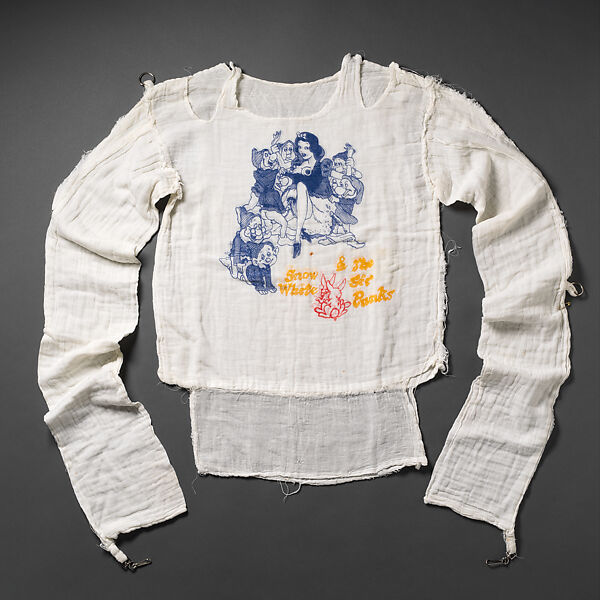
The fashion student I interviewed also viewed clothing as an important part of personal identity. For them, choosing clothes is not only about following trends but about finding something that feels personally connected to them. This suggests that fashion can become part of how people understand themselves. The designer interview gave another perspective. Designers can use clothing to question ideas about gender, beauty, and social expectations. A garment does not always have to follow traditional ideas of what clothing "should" look like. Through unusual silhouettes, materials, or construction, designers can challenge what society considers normal. Wilson (2003) similarly discusses fashion's ability to mark out identity or challenge existing identities.
Her work shows that fashion has a complicated relationship with society: clothing can help people fit into social groups while also giving them a way to distinguish themselves from others. The stylist interview also showed how fashion can communicate individuality. Styling can change the meaning of a garment depending on how it is combined with other clothing, accessories, or an environment. Someone may intentionally avoid current trends because they want to create an identity that feels different from mainstream fashion. This makes fashion political because identity is never completely separate from society. Ideas about what is considered appropriate, attractive, masculine, feminine, professional, or rebellious are influenced by cultural expectations.
Fashion gives individuals a way to participate in these expectations, but it can also give them a way to challenge them
Theme 2: Fashion as Economic and Labor Politics
The second theme focuses on what happens behind the garment. One interview participant stated: “Behind every garment there is a whole system of money, labor, and business decisions.” This quote changes the way we can look at a piece of clothing. When we see a finished garment, we usually focus on its colour, shape, fabric, or brand. However, before reaching the consumer, the garment has already passed through a large system of production. The OECD describes garment and footwear supply chains as highly complex and fragmented, involving multiple stages from raw materials and textile production to manufacturing and retail. These supply chains can also involve risks relating to wages, working conditions, health and safety, and workers' rights (OECD, 2018).
The garment worker interview highlighted the importance of thinking about who actually makes the clothes we wear. The person wearing a garment may have no connection to the person who produced it. This creates a separation between the final product and the labour required to make it. The designer interview also showed that design decisions have consequences beyond appearance. Designers choose materials, production methods, quantities, and manufacturing processes. These decisions can a ffect production costs and the people involved in production. The buyer interview demonstrated the economic side of fashion. When consumers purchase from a particular company, their money supports that business and its production system.
Therefore, shopping is not completely separate from economic politics. The sustainability researcher also emphasized that fashion production involves environmental and social consequences. Clothing has environmental impacts throughout its life cycle, including production, transportation, use, and disposal (Ivanova et al., 2021).
These perspectives show that the politics of fashion exist behind the final image. A garment can look simple and beautiful while still having a complicated production history.
The White Shirt as a Design Object
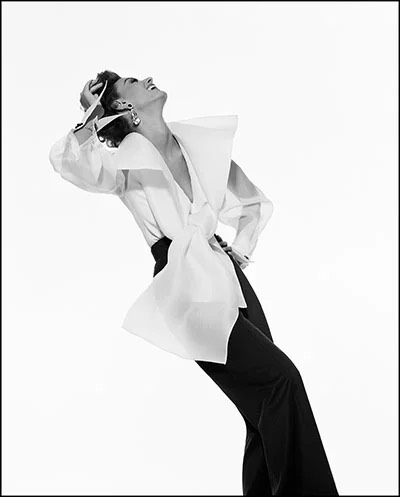
The white shirt is a useful example of how these two themes connect. Visually, a white shirt can appear neutral and simple. However, it can communicate different meanings depending on the context. A white shirt worn with formal trousers can represent professionalism and authority, while an oversized or reconstructed white shirt can communicate individuality or challenge traditional ideas of dress. This demonstrates that the meaning of clothing is not fixed. The same garment can communicate different identities depending on who wears it, how it is styled, and where it is worn. At the same time, the white shirt has a production history.
Its fabric has to be produced, the garment has to be cut and sewn, and it must be transported and sold. The OECD identifies stages including fibre production, fabric manufacturing, cutting, sewing, embroidery, printing, trading, and recycling within garment supply chains (OECD, 2026). Therefore, the white shirt represents both sides of my research question: what a garment communicates on the outside and the systems that exist behind it.
Discussion
The two themes are closely connected. Fashion allows individuals to express who they are, but their clothing choices also connect them to a larger economic system. For example, someone may choose a particular shirt because it represents their identity. However, that shirt was designed, manufactured, transported, marketed, and sold before it reached them. A personal fashion choice therefore exists within a much larger system.This is what makes fashion political. Politics does not only refer to governments or elections. It can also involve relationships between identity, power, labour, money, social expectations, and access. Wilson's (2003) work is particularly relevant because she treats fashion as a social and cultural phenomenon rather than simply an aesthetic practice.
Her discussion of identity, gender, the fashion industry, and oppositional dress demonstrates how clothing can both reflect and challenge society. The interviews support this idea from different perspectives. The student, designer, stylist, consumer, photographer, garment worker, buyer, and sustainability perspectives all reveal different relationships with fashion. Together, they show that fashion affects both individuals and larger systems.
Conclusion
Fashion is political because it is connected to both identity and systems of power. The first theme, fashion as identity and self-expression, demonstrates how clothing allows people to communicate who they are and how they want to be seen. The second theme, fashion as economic and labor politics, shows that every garment is connected to workers, businesses, money, materials, and production decisions. The white shirt demonstrates both sides clearly. It can be used to communicate personal identity while also representing the invisible system of labour and economics behind its production. Ultimately, fashion should not be understood as simply clothing or aesthetics.
It is a form of communication and a social system. What we wear can tell people something about ourselves, while the clothes themselves can tell us something about the systems that produce them. Fashion is political because
it exists between the individual, society, and the systems behind what we wear.
References
Chrimes, C., Boardman, R., McCormick, H., & Vignali, G. (2019). The dress and the self: How dress styles express identities. International Foundation of Fashion Technology.
Ivanova, D., Stadler, K., Steen-Olsen, K., Wood, R., Vita, G., Tukker, A., & Hertwich, E. G. (2021). The environmental impacts of clothing: Evidence from United States and three European countries. Sustainable Production and Consumption, 27, 2153–2164. https://doi.org/10.1016/j.spc.2021.05.013
Johnson, K. K. P ., Lennon, S. J., & Rudd, N. A. (2014). Dress, body and self: Research in the social psychology of dress. Fashion and Textiles, 1, Article 20. https://doi.org/10.1186/s40691-014-0020-7
OECD. (2018). OECD due diligence guidance for responsible supply chains in the garment and footwear sector. OECD Publishing. https://doi.org/ 10.1787/9789264290587-en
OECD. (2026). Due diligence essentials for responsible garment and footwear. OECD Publishing.
Wilson, E. (2003). Adorned in dreams: Fashion and modernity (Rev. ed.). Rutgers University Press.
Publication record
- Article ID
- ODCS-V0-015
- Received
- 2026.09.17
- First posted
- 2026.09.20
- Final author-submitted edition
- 2026.10.01
- Language
- English
- Status
- Final published edition (original submission); editorial decision, not independent peer review
- Text-only archive DOI
- 10.5281/zenodo.23072862
Editorial decision: this is the final published version. Earlier screening notes and signed comments remain dated records; publication does not imply independent peer review.
Citation
Myat Mon Thant. (2026). Fashion Is Political. Open Design & Card Studies. DOI: https://doi.org/10.5281/zenodo.23072862.
Original PDFText-only archival PDFEarlier editorial note
Published with the author's agreement to full-text publication under CC BY-NC 4.0. The author elected to retain the original submission as the final edition without further revision. The submitted English manuscript is retained, with paragraph and figure layout adapted for web reading; the original PDF remains available. The original PDF is titled "Why Is Fashion Political?"; the journal display title is "Fashion Is Political." Editorial screening and signed post-publication review remain visible; no completed independent peer review is claimed. CC BY-NC 4.0 applies to the author's original text only; separately credited third-party images remain subject to their own rights and are omitted from the text-only archival PDF.