Editorial introduction
This qualitative visual analysis examines how the 2019 Volkswagen Beetle reinterprets its design heritage through rounded forms, a curved roofline, circular headlights and familiar proportions. Shwe Yee Win discusses three themes: retro styling and nostalgia, the emotional character of rounded form, and the balance between historical identity and contemporary design. The manuscript draws on visual interpretation and secondary literature, and explicitly distinguishes emotional appeal from demonstrated consumer attachment. This introduction was prepared by the editorial office.
Visual references
Introduction
Car design involves more than simply getting from one place to another; the way a car is designed can express identity, personality, history, and emotion. There are some cars that stand out since their design remains unique even though trends change. The 2019 Volkswagen Beetle Final Edition is a good example of a vehicle whose appearance is closely connected with its identity. The car's rounded shape, circular headlights, curved roof, and small size are what make it different from other cars, and these features also connect the newer Beetle models with the older ones, thus helping the car to maintain a familiar identity over the years.
The Volkswagen Beetle has been around for a long time, and the more recent models have retained features from the original while at the same time adapting them for today's drivers. The 2019 Beetle is of particular significance since it was the last of the modern Beetles; although its technology, interior, and construction were up to date, the exterior still displayed classic design features from earlier versions. Volkswagen chose to keep these familiar elements and improve them rather than abandon the past, which is why the 2019 Beetle serves as a good example of how references to the past can remain important in a modern product.
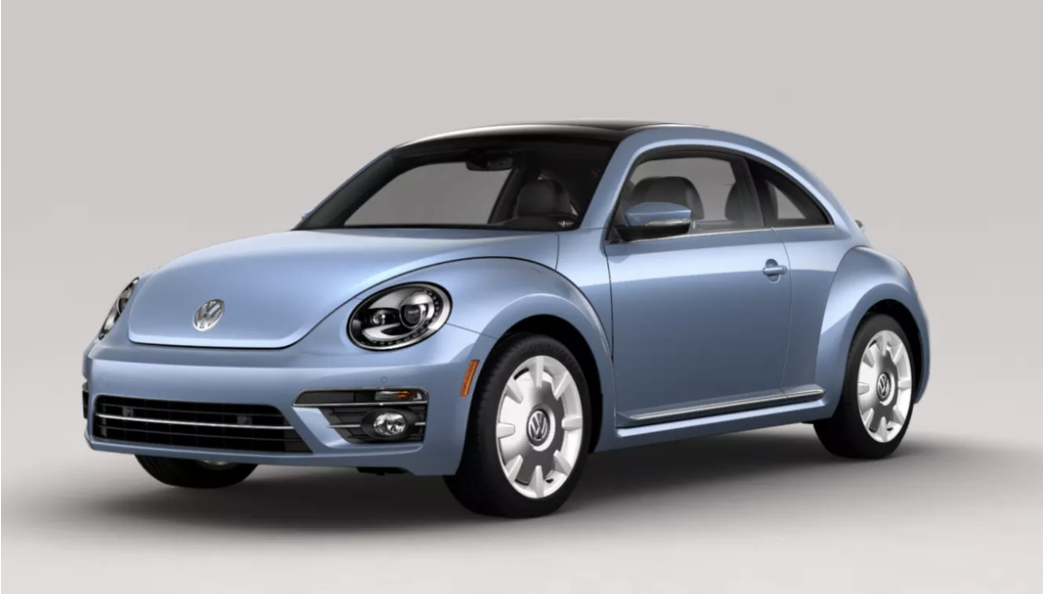
The 2019 Beetle is recognized for its rounded appearance, thanks to its curved roof, rounded body, and circular headlights, which make it look softer compared to cars that have sharp edges and angles. These characteristics are directly associated with the Beetle's classic image, and as a result, the design has both a modern feel and is linked to a long-standing tradition. Volkswagen itself referred to the 2019 model as a unique vehicle with a distinctive character, not merely one that featured a completely new design (Volkswagen, 2019).
The link between the past and the present means that memory is incorporated into the design. Retro design involves incorporating visual elements from the past into modern products. In the case of the Beetle, such features do more than just make the car easily recognizable. They may remind people of earlier Beetles, trigger personal memories, connect with popular culture, or evoke a general sense of the past. Previous research carried out as part of this project discovered that the Beetle's appearance can give rise to feelings of friendliness, uniqueness, and recollections of the older models. At the same time, retro styling can also pose a problem, as some people might view these features as being less modern or less sporty.
Because of the reasons just mentioned, the 2019 Volkswagen Beetle serves as an excellent example of the way in which visual design, nostalgia, and emotional appeal are linked. Rather than considering performance or technical specifications, this study looks at the car's appearance and pays particular attention to its rounded shape, circular headlights, proportions, and other retro features that connect the 2019 version with the Beetle's classic image. The aim is to find out how these visual elements convey meaning and how shape can affect the emotional identity of a modern product.
Methods
The study carried out a qualitative visual analysis of the retro design of the 2019 Volkswagen Beetle Final Edition and concentrated on the car's look rather than its mechanical performance or technical specifications. The 2019 model was selected since it is the most recent modern Beetle and yet still retains the visual characteristics of the earlier versions.
The study focused on the exterior design of the 2019 Volkswagen Beetle and involved using images taken from various angles to identify design elements that were repeated. Particular attention was paid to the rounded shape, the curved roof, the circular headlights, the body proportions and other retro features. These features were selected since they contribute to making the Beetle easy to recognize and link the new model with its history.
The visual analysis was supported by secondary research. A review was carried out of the available sources on the Volkswagen Beetle, retro design, nostalgia, product identity, and emotional design. Information from Volkswagen and the car industry was used to explain the design and history of the 2019 Beetle. Academic articles were consulted in order to find out how the visual features and references to the past can evoke feelings of nostalgia and emotion. The key points from these sources were then compared with those observed in the car's design.
The analysis started by identifying the most striking visual characteristics of the 2019 Beetle and examining the way these features relate to the car's classic image. The observations that were similar were grouped together in order to discover common design themes. These themes were then divided into three main categories: retro styling and nostalgia, the emotional appeal of the rounded shapes, and the connection between the retro identity and modern car design. It is on the basis of these three areas that the findings and discussion are built.
Result
When the 2019 Volkswagen Beetle was examined visually, three main themes emerged: a retro style and a sense of affection, an emotional appeal resulting from its rounded shape, and a balance between its retro identity and modern automotive design. This conclusion was reached by looking at the repeated visual features of the vehicle, especially its shape, roofline, headlights, body form, and proportions.
Theme 1: Retro Styling and Nostalgia
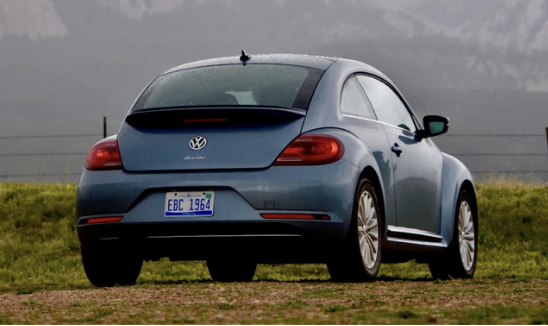
The main theme that was identified in the analysis is the evident use of retro styling. The 2019 Volkswagen Beetle keeps among its visual features, several aspects that are closely associated with the look of the earlier Beetle models. One of the most obvious features is its general rounded shape. Instead of having a normal straight roofline, the Beetle has a continuous curved roofline which creates a special arch above the passenger compartment. This rounded form makes the car easy to recognize and gives a visual link between the modern version and the historical image of the Beetle.
The circular headlights also contribute to the car's retro look since they are placed prominently at the front and match the curved hood and the rounded contours of the body. Even though the 2019 model has been modernized, these features retain the main visual traits of the Beetle's earlier design, and so the vehicle does not seem entirely disconnected from its past.
The fact that it combines old and new design features means that it provides a visual link to the past. The Beetle of 2019 can be seen as a modern version of an existing design rather than as a completely new kind of exterior look. This implies that by using retro styling, the Beetle is able to evoke a sense of nostalgia while at the same time maintaining a clear connection with its design history.
Theme 2: Emotional Appeal Through Rounded Form
The second point is about the emotional character conveyed by the Beetle's rounded shapes, with curved forms being used all over the exterior, such as on the roof, the bonnet, the wheel arches, the headlights, and the general body outline. Taken together, these features give the vehicle a softer look compared with one whose design is based on sharp edges and strongly angular lines.
The visual character of the vehicle is especially dependent on its front aspect, since the circular headlights and the curved surfaces give it a simple and recognizable configuration. In terms of appearance, the vehicle thus looks less aggressive than other cars which have narrow headlights, sharp body lines, or highly angular front ends. The repeated use of curved shapes contributes to a consistent look throughout the vehicle and at the same time enhances its individuality.
The Beetle is therefore easily recognized visually because of these features; even though certain details have been modernized, its fundamental rounded shape is still identifiable as part of the Beetle's identity. The emotional effect of the design is not due to any single feature but results from the way the various curved parts combine. It follows that the continuous use of rounded shapes contributes to a gentler visual character and enhances the Beetle's distinct identity.
Theme 3: Retro Identity and Contemporary Design
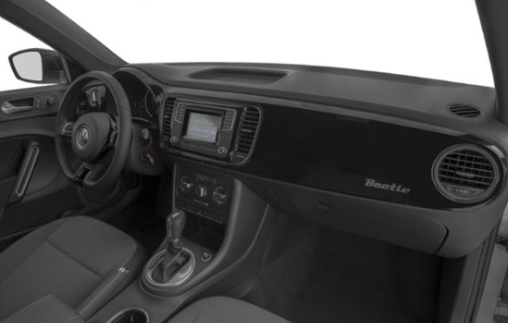
A third theme that has been identified in the analysis is the connection between the Beetle's historical identity and its position as a car today. The 2019 Beetle does not merely reproduce an earlier model; its exterior has retro features that are easily recognized, together with cleaner surfaces, updated proportions, contemporary lighting details, and other modern automotive features.
A balance is achieved between visual continuity and change. Should all of the Beetle's historical features be eliminated, the vehicle might lose some of the qualities which enable it to be instantly recognized. On the other hand, keeping the original look without making any alterations would make it hard to treat the vehicle as a modern vehicle. The 2019 design therefore keeps some of the features linked with the Beetle while altering their proportions and details.
In the same way, this close link with the past produces a visual contrast with car designs that feature sharper lines, more aggressive shapes, and a futuristic look. The Beetle, on the other hand, still places great emphasis on its existing shape and its retro qualities. It is therefore both a notable characteristic and a restriction on how much its appearance can be altered, yet still allows it to be recognized as a Beetle.
It indicates that the 2019 Volkswagen Beetle features selective modernization in such a way that it looks up to date without entirely giving up the visual features linked to its historical identity.
Discussion
The study indicates that the retro design of the 2019 Volkswagen Beetle conveys emotional significance by keeping a visible link between the car's past and present. The three themes found in the visual analysis—retro styling and nostalgia, the emotional appeal of the rounded shape, and the balance between heritage and modern design—are closely related. Instead of viewing nostalgia just as a decorative element, the Beetle makes use of its well-established visual features as an essential part of its identity.
The fact that the Beetle has a retro appearance can be seen in various identifiable features, including its rounded shape, curved roof, and circular headlights. This link with the past is especially significant since Volkswagen itself called the later Beetle model 'retro-inspired' when production stopped in 2019 and also portrayed the Beetle as a significant element of the company's history and identity. It is therefore reasonable to regard the similarity between the 2019 model and the earlier ones as going beyond a simple visual coincidence; specific historical features were deliberately kept as the design evolved.
The way in which the past is linked to the present also accounts for the nostalgic quality noted in the Results. It is not true that nostalgia can only arise from a person's own direct memories. For instance, Merchant and Rose (2013) looked into vicarious nostalgia, a phenomenon whereby people can feel emotional attachments to periods which they have not personally lived through. Their study showed that nostalgia associated with an imagined past can enhance people's perception of brand heritage and lead to an emotional attachment. This is pertinent to the Beetle since not everyone who sees a 2019 model will have owned or had direct experience of an original Beetle. Yet the Beetle's clearly identifiable historical appearance is still able to convey a connection with an earlier time. It therefore follows that the Beetle's retro features can act as visual signals pointing to the past even if the person has no personal memory of an older Beetle.
The second point relates to the gentle emotional effect produced by the Beetle's rounded shape. Rather than relying on sharp edges and bold visual features, the Beetle is characterized by curved forms everywhere. The roof, the headlights, the wheel arches and the overall surface of the car thus form a coherent visual style. In this study, such features were seen as contributing to an open and individual personality. It is, however, necessary to make a distinction between emotional appeal and emotional attachment. As Mugge, Schoormans and Schifferstein (2008) point out, product attachment means having an emotional bond with a specific product, and the fact that a product elicits a positive emotional response does not necessarily show that attachment exists. Since the current study does not include interviews or surveys of Beetle owners, it cannot say that the rounded shape causes people to become attached to the car.
The results indicate that visual design has certain features that can support emotional meaning; the clearly identifiable rounded shape confers on the Beetle a strong visual personality and sets it apart from vehicles that have a different design approach. This point is significant for the research question since emotional appeal is not achieved solely through nostalgia. The product's physical form also plays a role in how it conveys character. The Beetle shows that consistent visual characteristics can make a product easily recognizable and enable its design identity to stay identifiable throughout the years.
A more complicated relationship between heritage and modernization is shown by the third finding. The 2019 Beetle did not simply copy the original historical vehicle; instead, its well-known features were incorporated into a modern car. This approach was required since giving up entirely on the traditional shape might weaken the link with Beetle heritage, while reproducing the old design without any developments could make the product less appropriate for the present day. The 2019 model thus shows that retro design can involve an interpretation rather than just a reproduction.
A vital part of this balance is visual recognition. The Beetle shows that a product can change with time and still have key features which maintain its identifiable character. In the 2019 model, the proportions and details are more in keeping with current tastes, yet the general rounded shape still conveys the Beetle's identity. It therefore appears that effective retro design does not demand that designers copy the past exactly; instead, identifiable historical elements can be chosen, altered, and combined with modern features in order to achieve a sense of continuity among the various generations of the product.
The significance of this relationship is supported by research into nostalgic consumption. Weingarten and Wei (2023) define nostalgia as an emotion that can affect consumption, advertising, and the choice of products, at the same time pointing out that its effects are not always positive and that they vary according to the context. Likewise, research concerning vintage products indicates that consumers do distinguish products to some extent on the basis of how strongly they seem linked to the past, and that this perception may have an impact on desirability and value. Although these studies do not specifically show how consumers respond to the Beetle, they do offer a useful theoretical explanation for why references to earlier design periods can have meaning in current products.
This also points out a possible drawback of retro design. While a strong historical identity can help a product to stay recognizable, it may at the same time limit how greatly designers are able to alter its appearance. In the case of the Beetle, the curved roofline and the generally rounded shape are essential to its identity; if too many of these features were removed, the car might appear more up-to-date but would at the same time weaken its direct association with the Beetle name. On the other hand, retaining these features results in a conscious distinction from automotive designs that are based on sharper or more futuristic lines. Thus, the design demonstrates that heritage can function both as a valuable source of identity and as a design constraint.
The findings address the research question by indicating that the 2019 Volkswagen Beetle creates a sense of nostalgia and emotional appeal through the continued use and modern reinterpretation of familiar historical designs. The car's rounded shape and other retro-style features provide a visual link between the current model and its heritage, while at the same time its modern approach enables these features to be incorporated into a more up-to-date product. The significance of the Beetle is therefore not just that it looks 'old-fashioned'; its design shows how visual continuity can ensure that a product's history remains visible in its present-day identity.
Conclusion
To sum up, this study showed that the retro design of the 2019 Volkswagen Beetle conveys a sense of nostalgia and emotional appeal by retaining the visual features that are easily recognized from its design history. The most prominent themes detected were retro styling, nostalgia, and the emotional appeal resulting from the rounded shape, and the analysis also revealed a significant connection between historical identity and current design.
The rounded shape, the curved roof, and the circular headlights enable the 2019 Beetle to keep a clear visual link with the previous generations. Volkswagen refers to the Beetle as having a body and design that are immediately recognizable, and the 2019 Final Edition includes design features inspired by the car's heritage. The study shows that these features enable the vehicle to refer to its history without merely copying an older design.
The study also discovered that the frequent use of curved shapes helps to establish the Beetle's unique visual character; instead of depending on one particular feature, its identity is the result of the combination of its shape, its headlights, its proportions, and the other rounded details. Yet there is a problem when it comes to modernizing the car, since major alterations to these features could weaken the visual link between the new models and the earlier ones.
The 2019 Volkswagen Beetle shows how a retro design can connect the past with the present by means of visual continuity. It proves that traditional features can be reinterpreted in a modern product so as to maintain its identity, stimulate nostalgia, and generate emotional appeal. It therefore serves as a useful example of how product designers may create meaning beyond the basic functional purpose of a product by making use of recognizable visual heritage.
The study looks at the way the 2019 Volkswagen Beetle's retro design conveys a sense of memory and emotional appeal, with a focus on the vehicle's visual features such as its rounded shape, curved roof, circular headlights, and general proportions. It involved a qualitative visual analysis as well as secondary research on retro design, nostalgia, product identity, and emotional design. Three main themes were found: retro styling and nostalgia, the emotional appeal resulting from the rounded form, and the link between historical identity and current design. The research indicates that the Beetle keeps a strong connection with its design heritage by adapting its well-known features to suit a modern car. In general, the study demonstrates how visual continuity and retro-inspired design can help to maintain product identity, establish associations with the past, and enhance the emotional appeal of a contemporary product.
References
Merchant, A., & Rose, G. M. (2013). Effects of advertising-evoked vicarious nostalgia on brand heritage. Journal of Business Research, 66(12), 2619-2625.
Mugge, R., Schoormans, J. P., & Schifferstein, H. N. (2008). Product attachment: Design strategies to stimulate the emotional bonding to products. In Product experience (pp. 425-440). Elsevier.
Volkswagen of America. (2019, July 10). Iconic Volkswagen Beetle ends production. Volkswagen Newsroom.https://media.vw.com/releases/1177 Source
Weingarten, E., & Wei, Z. (2023). Nostalgia and consumer behavior. Current opinion in psychology, 49, 101555.
Schifferstein, H. N., & Zwartkruis-Pelgrim, E. P. (2008). Consumer-product attachment: Measurement and design implications. International journal of design, 2(3).
2019 Volkswagen Beetle Pictures. CarsDirect gallery link supplied in the revised manuscript; individual photograph matches were not verified.
Publication record
- Article ID
- ODCS-V0-007
- Received
- 2026.09.16
- First posted
- 2026.09.16
- Final author-submitted edition
- 2026.09.28
- Language
- English
- Status
- Final published edition (revised manuscript); editorial decision, not independent peer review
- Text-only archive DOI
- 10.5281/zenodo.23018999
Editorial decision: this is the final published version. Earlier screening notes and signed comments remain dated records; publication does not imply independent peer review.
Citation
Shwe Yee Win. (2026). Retro Styling and Emotional Appeal in the 2019 Volkswagen Beetle Final Edition. Open Design & Card Studies. DOI: https://doi.org/10.5281/zenodo.23018999.
The Zenodo DOI identifies a separate text-only archival PDF. It does not include or license the vehicle photographs displayed on this page.
Final author-submitted PDF (v2.0)Initial PDF (v1.0)Earlier editorial note
The author supplied this revised English manuscript for final publication. The web edition follows its text and includes the three submitted vehicle photographs; the source PDF is linked above. The author's CC BY-NC 4.0 licence applies to original text only, not the photographs. The dated editorial screening note below concerns version 1.0, which contained no images. Version 2.0 adds images, but their individual provenance and reproduction rights have not been verified; the earlier requests for a traceable visual-analysis procedure and more cautious conclusions also remain visible. Publication here does not claim completed independent peer review or image-rights clearance.
Version History / 版本记录
-
Version 1.0 · Open Review Edition
Initial English open-review edition with the source PDF, five reference entries and an editorial screening note. Based on the submission updated at 12:17 PM on 16 September 2026.
-
Version 2.0 · Final Author-Submitted Edition
The author supplied a revised title, two short wording changes, three vehicle photographs and a photo-gallery link. The earlier editorial note is retained as a dated record; image attribution and the methodological and interpretive questions noted there remain open for post-publication discussion.